


Page 36 - COMPOSITE SOLUTIONS - Fascicolo 2/2016 - Issue 2/2016
P. 36
w MATERIALS
(silicon infiltration process the liquid-LSI9). The
reaction of the method summarized leaves of the metal residues in the product, so the resistance decreases at high temperatures. Another interesting method is the impregnation of the liquid polymer (LPI) method based on organic metal precursor or pre-ceramic as silazanate carbosilazanate. Under to the pyrolysis process, the ceramic precursors are converted to a ceramic material to produce a glass-SiCN, SiC, Si3N4 or a mixture of these components. Such polymers are used for the formation of matrices through a multiple infiltration of porous preformed fiber followed by a pyrolysis process. Components with very complex shapes can be produced with this method. However, the large number of processes infiltration/pyrolysis employed for the production of a relatively dense material are both very costly and require time. The complexity of this type of production is due to the low density of the amorphous pyrolysis products are then converted to the crystalline state at temperatures ranging over 1400°C, which makes it precise microstructures of the controls of the CMC components that are difficult to obtain. The residual porosity also influences the mechanical properties of the final component. So it is required to improve procedures to lower the cost of components of the ceramic matrix material.
la resistenza decrementa a temperature elevate. Un altro metodo interessante è l’impregnazione del polimero liquido (LPI) metodo basato su precursori metallici organici preceramici come silazanato o carbosilazanato. Sulla pirolisi i precursori di ceramica sono convertiti in un materiale ceramico per produrre un SiCN-vetro, SiC, Si3N4 o un miscuglio di questi componenti. Tali polimeri sono utilizzati per la formazione di matrici attraverso una multipla infiltrazione di fibre preformate porose seguita da un processo di pirolisi. Componenti con forme veramente complesse possono essere prodotti con questo metodo. Comunque, il grande numero di infil- trazioni/pirolisi processi impiegati per la produ- zione di un materiale relativamente denso sono ambedue molto costose e necessitano di tempo. La complessità di questo tipo di produzione è dovuta alla bassa densità dei prodotti amorfi di pirolisi, che vengono poi convertiti nello stato cri- stallino a temperature che vanno oltre i 1400°C, il quale fa diventare precisi i controlli delle
The whole was successfully passed and a new lowering of costs for the production method has been developed thanks to TTT® Process, also for the production of composite C/Si3N4. In this method, a long 2-D carbon preformed on a filter inside a blind cavity, indicating the new combined energy method MW/ infrared Industries Chevron. A valid solution not only for the quality of the process but making the composite in Carbon/
Carbon and Carbon/SiC becoming attractive cost effective and applicable to a growing number of non-core industrial sectors. Also the low energy consumption in the production both of the matrices that lead to the realization of the densification of articles that are in line with the policies of the third millennium in particular in sensitization in energy saving and optimization of the consumption of power energy.
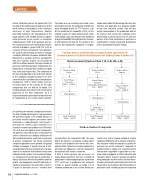
Pyrolisys process and infiltration of Carbon/Carbon and Carbon SiC
Schema di processo di pirolisi ed infiltrazione del Carbon/Carbon e Carbon SiC
Reinforcement (Carbon Fibre 1-D, 2-D, 3D, n-D)
Thermosetting Resin
Thermosetting Pitch
Hydrocarbon Vapour
Liquid Phase Pyrolysis with/without Pressure 550° - 800°C
Impregnation
Vapour Phase Pyrolysis 800° - 1200°C
Impregnation
Carbonize 1000° - 1500°C
Heat Treatment 1500° - 220°C
Heat Treatment 1500° - 220°C
Solid Phase Pyrolysis 1000° - 1500°C
Impregnation
Heat Treatment 1500° - 220°C
Carbon-Carbon Composite
34
compositesolutions n.2/2016
microstrutture dei componenti CMC che sono difficili da ottenere. La porosità residua inoltre influisce sulle proprietà meccaniche del com- ponente finale. Quindi è necessario migliorare le procedure per abbassare i costi dei componenti dei materiali delle matrici ceramiche.
Il tutto è stato superato con successo, un nuovo abbassamento di costi per il metodo di produzione è stato sviluppato grazie al processo TTT®, anche per la produzione dei compositi C/Si3N4. in questo metodo, un lungo 2-D di carbonio preformato su di un filtro dentro una
cavità cieca, indica il nuovo metodo di energia combinata MW/Infrared di Chevron Industries. Una soluzione valida non solo per la qualità del processo ma anche rendendo il composito in Carbon/Carbon e Carbon SiC economicamente interessante e appetibile e applicabile a un nu- mero sempre maggiore di settori industriali non strategici. Inoltre, il basso consumo energetico nella produzione sia delle matrici sia delle densi- ficazioni, portano alla realizzazione di articoli che sono in linea con le politiche del terzo millenio, in particolare nella sensibilizzazione nel risparmio


