


Page 15 - COMPOSITE SOLUTIONS - Fascicolo 2/2016 - Issue 2/2016
P. 15
w AERONAUTICS L’introduzione della fibra di carbonio negli aerei a fusoliera stretta potrebbe essere un notevole fattore di cambiamento
expected to be introduced by 2030, is yet to be decided. In wide body aircraft the adoption of carbon fibre has advanced as lightweighting is a key driver in their economics. The threshold of benefits versus barriers for adoption of carbon
carbonio su fusoliere strette è differente e l’im- postazione della catena di distribuzione per la produzione su scala industriale rappresenta la sfida principale.
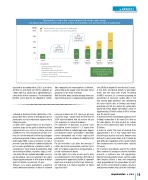
Le flotte aeree rappresentate sia da velivoli a fusoliera larga che da quelli a fusoliera stretta registreranno una crescita al tasso annuale (CAGR) di circa il 4% nei prossimi 20 anni, in li- nea con l’incremento del traffico di passeggeri nello stesso periodo. In base a quanto è emerso dallo studio FMG, in uno scenario in cui non si prevede l’uso della fibra di carbonio strutturale per le nuove piattaforme a fusoliera stretta, e considerato il tasso futuro di produzione degli aerei Boeing e Airbus a fusoliera larga, il mer- cato della fibra di carbonio dovrebbe crescere più del doppio, con una transizione dal valore attuale approssimativo di 400 milioni di dollari agli 850 milioni nei prossimi 20 anni. Tuttavia, se le nuove piattaforme a fusoliera stretta dovessero adottare la fibra di carbonio
fibre composites on narrow bodies is different, and setting up the supply chain for larger series production is the main challenge.
Both the wide body and narrow body fleets are expected to grow at a compound annual growth
nella percentuale del 50% come per gli aerei a fusoliera larga, i volumi totali del mercato nel 2034 triplicherebbero fino ad arrivare ad una cifra superiore ai 2 miliardi di dollari.
Per soddisfare la domanda, in questo caso, dovrebbero essere istituite 1-1,5 nuove linee produttive di fibre di carbonio ogni anno. Eppure una domanda simile è prevedibile e dovrebbe essere compatibile con le reali capacità dei produttori di fibra di carbonio di soddisfare tali incrementi.
Per gli investitori e gli attori del mercato, il settore dei veicoli aerospaziali realizzati con le fibre di carbonio rappresenta un’opportunità a rischio relativamente basso.
Ciò non toglie che siano ancora aperte delle aree problematiche. Può l’industria delle fibre di carbonio offrire opportunità valide al segmento degli aerei a fusoliera stretta? E gli attuali lea- der industriali e le imprese possono far fronte a questa sfida?
rate (CAGR) of around 4% over the next 20 years, in line with anticipated growth in passenger traffic over the same time frame. According to FMG's research, in a scenario assuming no penetration of structural carbon fibre in the new narrow body platforms, and considering the future build rates of Boeing and Airbus wide body aircraft, the market for carbon fibre would more than double from today's value of approximately US$400 million to $850 million over the next 20 years.
If, however, the new narrow body platforms were to adopt carbon fibre at the same 50% level as the wide bodies, the total market for carbon fibre in 2034 would nearly triple to more than $2 billion.
In order to satisfy that level of demand then approximately 1 to 1.5 new carbon fibre lines has to be put in place each year. However that demand is quite predictable and it should be well within the capabilities of the current carbon fibre manufacturers to achieve those capacity increases.
For investors and industry players the carbon fibre commercial aerospace market therefore presents a relatively low risk opportunity. However some questions remain. Can the carbon fibre industry deliver a new and compelling value proposition for the narrow body aircraft? And can the current industry leaders, structure and business models step up to this challenge?
The introduction of carbon fibre on narrow body aircraft could be a game changer
compositesolutions n.2/2016
13


